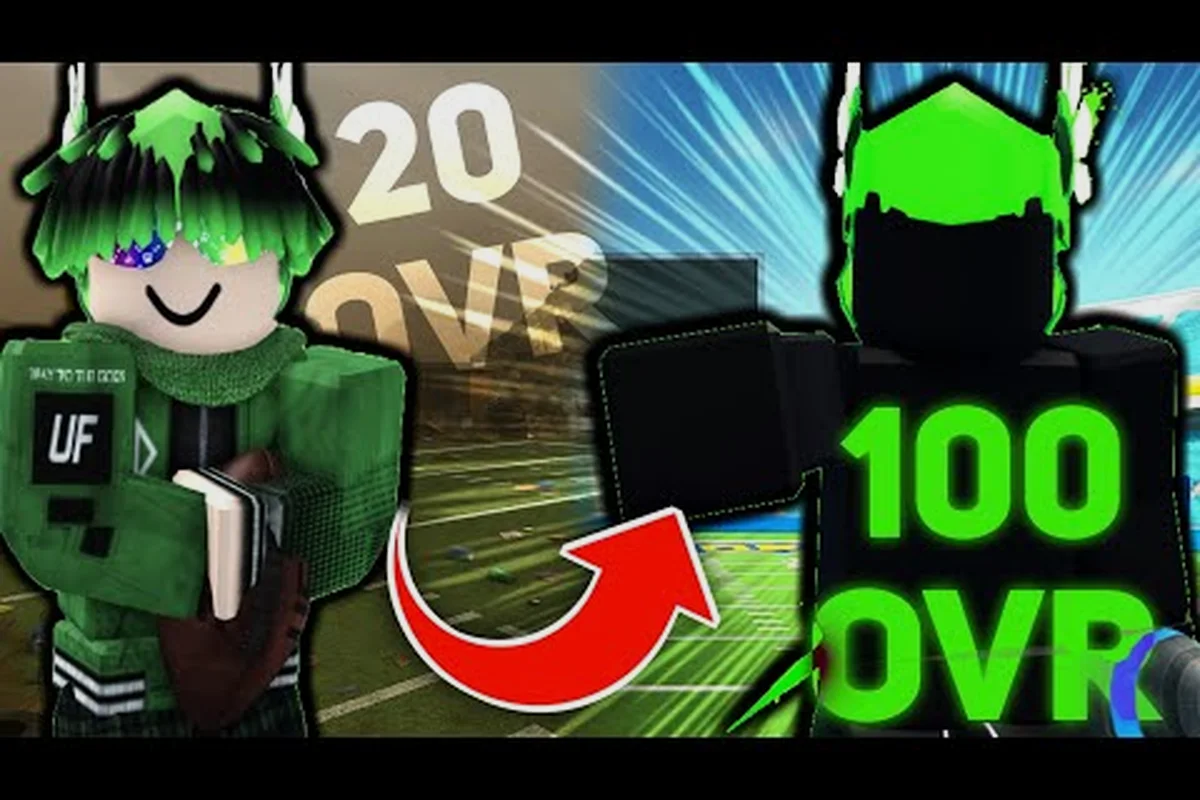
Understanding NFL Universe Football progression milestones changes how you allocate every training point, because the gap between an average build and a max OVR player is rarely about total hours played. It is about hitting specific stat thresholds at specific overall ratings, then pivoting your XP spending before the cost curve punishes you. This guide maps the exact checkpoints, the best stat priority for each phase, and the realistic time to max OVR based on community testing.
The Core Progression Curve and Early Milestones
The first major NFL Universe Football progression milestones arrive before you reach 80 OVR, and most players waste this window by spreading XP across too many attributes. Community data consistently shows that a focused two-stat build outpaces a balanced build by roughly 30 to 40 percent in the same number of matches, simply because early attribute costs are low enough to stack multipliers. Your first checkpoint is the 70 OVR threshold, where the game unlocks competitive matchmaking queues and begins rewarding XP at a noticeably higher rate.
During the 60 to 75 OVR stretch, the best stat priority is almost always Speed and your position-specific core attribute. For a wide receiver, that means Catching; for a quarterback, Throw Power; for a linebacker, Tackle. The reason is mechanical: early overall rating calculations weight your highest attributes more heavily than your lowest, so pushing two stats to 85 produces a higher OVR than raising five stats to 70. This creates a compounding effect because higher OVR unlocks better training drills, which in turn generate more XP per session.
| OVR Range | Primary Focus | Secondary Focus | XP Priority |
|---|---|---|---|
| 60–70 | Speed | Position core stat | Spend all XP on two attributes |
| 70–75 | Position core stat | Stamina | Unlock competitive queue, then push core to 85 |
| 75–80 | Agility | Awareness | Balance third stat to avoid OVR plateau |
| 80–85 | Awareness | Strength | Shift to four-stat spread for cost efficiency |
| 85–90 | Strength | Catching/Tackle | Fill gaps, avoid any stat below 70 |
| 90–99 | Weakest remaining stat | Stamina | Equalize all attributes to push max OVR |
The table above reflects the cost-efficiency pivot that most players discover too late. Early on, two attributes are cheap and impactful. By 80 OVR, however, each additional point in your top stat costs significantly more than raising a neglected stat from 60 to 75, which is why the best stat priority shifts from stacking to balancing. If you ignore this pivot, you will hit a hard plateau around 85 OVR where every upgrade feels painfully slow.
Player Development Routes and the 80 OVR Wall
NFL Universe Football player development splits into three distinct routes once you cross 75 OVR, and choosing the wrong one is the most common reason players report being stuck. The Match Grind Route relies on completing full games and earning XP through performance metrics like touchdowns, tackles, and completions. The Drill Route focuses on repeatable training exercises that offer smaller but faster XP payouts. The Event Route leverages limited-time modes that multiply XP gains during specific windows.
The 80 OVR wall is real, but it is not a hard cap. What happens is that the XP required per overall point jumps by roughly 40 percent at 80, then again at 90, according to community tracking spreadsheets. Players who hit the wall usually have one stat at 95 and everything else at 65, because the game's OVR formula begins demanding a minimum floor across all attributes. The fix is not to keep grinding your best stat but to raise your three lowest attributes to at least 75, which often produces two or three OVR points for less total XP than one point in your maxed stat.
The Match Grind Route
The Match Grind Route rewards volume and consistency. A full game against the CPU on default settings yields between 800 and 1,200 XP depending on your performance, while a competitive match against another player can push that to 1,500 or more if you win. The hidden advantage is that match XP scales with your match rating, which is calculated from objective completion rather than raw stats. A receiver who catches five passes for 60 yards but scores two touchdowns will earn more XP than one who catches ten passes for 150 yards with no scores.
Because match length is fixed, this route produces predictable hourly XP, which makes it the easiest to plan around. The downside is that it requires active play, and the XP per hour drops if you lose frequently. For players who want to understand how overall rating interacts with match rewards, the OVR guide breaks down the exact formula and the fastest ways to push your rating upward.
The Drill Route
The Drill Route is the most XP-efficient method for players with limited time, because drills can be repeated in under two minutes and offer a flat XP reward regardless of match outcome. The catch is that drill XP is capped per day, and the cap resets on a 24-hour timer. Community testing suggests the cap is around 3,000 XP per day, which translates to roughly one OVR point every two days in the 75 to 85 range.
Drills also scale with your current OVR, so a player at 85 OVR earns more per drill than a player at 70 OVR. This creates a natural rhythm: use drills early in a session to bank guaranteed XP, then shift to matches once the drill cap is reached. The best stat priority during drill-focused weeks should be Stamina, because higher stamina allows you to complete more drills before the fatigue mechanic reduces your XP gains.
The Event Route
Limited-time events are the wildcard in NFL Universe Football player development, because they frequently offer 2x or 3x XP multipliers that stack with any active boosts. The seasonal event rotation typically includes a weekend tournament mode and a midweek challenge series, both of which reward bonus XP for completing specific objectives. If you are serious about accelerating your progression, the seasonal events guide maps the full reward structure and the best modes to grind during each window.
The key to the Event Route is timing. Saving your daily drill cap for an event day, then combining it with a 2x multiplier, effectively doubles the value of your entire session. Players who plan their progression around event calendars consistently report reaching 90 OVR two to three weeks faster than those who ignore events entirely.
Stat Priority by Position and Competitive Progression
The best stat priority in NFL Universe Football is not universal, because each position weights attributes differently in the OVR formula and in actual gameplay performance. A quarterback with 90 Speed but 70 Throw Power will underperform in competitive matchups, even if the OVR number looks respectable. Understanding your position's core attributes is the foundation of efficient progression.
| Position | Core Stat 1 | Core Stat 2 | Support Stat | Trap Stat |
|---|---|---|---|---|
| Quarterback | Throw Power | Throw Accuracy | Awareness | Speed |
| Wide Receiver | Catching | Speed | Route Running | Strength |
| Running Back | Speed | Ball Carrier Vision | Agility | Throw Power |
| Linebacker | Tackle | Speed | Strength | Catching |
| Defensive Back | Speed | Coverage | Awareness | Throw Power |
| Kicker | Kick Power | Kick Accuracy | Composure | Tackle |
The Trap Stat column is critical for competitive progression, because these attributes cost the same XP as core stats but contribute almost nothing to your on-field effectiveness. A quarterback who invests heavily in Speed is spending XP that could have gone to Throw Accuracy, and the OVR gain is misleading. Competitive players who understand this distinction consistently beat higher-OVR opponents who spread their points inefficiently.
NFL Universe Football competitive progression rewards specialization first and balance second. The matchmaking system uses OVR as its primary filter, which means two players at 85 OVR can have wildly different builds. The one who invested in core stats will dominate the one who chased a high overall through trap stats. This is why the best stat priority for competitive play is to max your two core attributes to 90 before touching any support stat beyond 75.
Reading the OVR Formula
The OVR formula in NFL Universe Football is not publicly documented, but community testing has reverse-engineered its general behavior. Position core stats carry roughly double the weight of support stats, and the formula includes a floor penalty that reduces your OVR if any single attribute falls below 60. This floor penalty is why players who ignore one stat entirely suddenly gain multiple OVR points when they finally raise it from 50 to 65.
The formula also appears to weight recent upgrades more heavily than older ones, which means spreading XP across four or five attributes often produces faster OVR gains than dumping everything into one stat. This creates an interesting tension: early progression favors stacking, while late progression favors spreading. The transition point is around 80 OVR, which is why that milestone feels like a wall for players who do not adjust their strategy.
Time to Max OVR and the XP Guide
The most common question in the community is how long it takes to reach max OVR, and the honest answer depends heavily on your playstyle and spending. For a free-to-play player who grinds matches and drills daily, the realistic time to max OVR is between three and five months, based on community reports from players who tracked their progression from 60 to 99. Players who purchase XP boosts or premium training passes can cut that time to six to eight weeks.
The XP guide below breaks down the total XP required at each milestone, based on aggregated community data. These numbers are estimates, because the exact XP curve varies slightly by position and update, but they provide a reliable planning framework.
| OVR Milestone | Estimated Cumulative XP | Typical Playtime | Key Unlock |
|---|---|---|---|
| 60 to 70 | 15,000 XP | 8–12 hours | Competitive queue, advanced drills |
| 70 to 80 | 45,000 XP | 25–35 hours | Event eligibility, team play |
| 80 to 90 | 120,000 XP | 60–80 hours | Elite drills, max stat cap raise |
| 90 to 95 | 180,000 XP | 40–50 additional hours | Prestige options |
| 95 to 99 | 250,000 XP | 50–70 additional hours | Max OVR, cosmetic unlocks |
The cumulative XP numbers reveal an important truth about NFL Universe Football progression milestones: the journey from 90 to 99 requires nearly as much XP as the entire journey from 60 to 90. This is why the late-game pivot to balanced stat distribution is so important, because raising five stats from 80 to 85 is often cheaper than raising one stat from 95 to 99. Players who understand this curve avoid the frustration of feeling stuck at 95 OVR.
XP Boost Stacking
XP boosts are the fastest way to compress the time to max OVR, but they only work if you stack them correctly. The game offers several boost types: a daily login boost, a match performance boost, and a premium multiplier that applies to all XP sources. These boosts stack multiplicatively in most cases, which means a 2x event multiplier combined with a 1.5x premium boost produces a 3x total multiplier, not 3.5x.
The optimal strategy is to save your premium boost for event days, then combine it with the daily login boost and grind matches until the boost expires. Community testing shows that a well-planned boost session can generate 10,000 to 15,000 XP in two hours, which is equivalent to three or four days of normal grinding. For players who want a deeper breakdown of the fastest leveling methods, the leveling guide covers the complete free-to-play route from 60 to 99.
Avoiding Progression Plateaus and Common Mistakes
Every player hits a plateau at some point, but the difference between a temporary stall and a permanent wall comes down to diagnosis. The three most common mistakes are over-investing in trap stats, ignoring the floor penalty, and grinding without boost stacking. Each of these mistakes wastes XP that could have been spent more efficiently, and each has a clear fix.
Over-investing in trap stats is the most insidious, because the OVR number keeps climbing while your actual performance stagnates. A wide receiver with 90 Strength and 80 Catching will have a respectable OVR but will drop passes against competent defenders. The fix is to respec if the game offers that option, or to immediately pivot all future XP into your core stats until they reach 90.
Ignoring the floor penalty is equally damaging, because the OVR formula punishes any stat below 60. A player who leaves Awareness at 45 while pushing Speed to 95 will find that each Speed point after 90 produces diminishing OVR returns, while a single point in Awareness produces an immediate OVR jump. The fix is to identify your lowest stat and raise it to at least 65 before continuing to push your primary attributes.
Grinding without boost stacking is a slower burn, because the XP loss is invisible. A player who grinds matches for two hours without any active boost earns the same XP as a player who grinds for one hour with a 2x boost, but the first player has spent twice the time. The fix is to always check the event calendar and daily boost availability before starting a grinding session, and to save your longest sessions for multiplier windows.
The Respec Decision
Some versions of NFL Universe Football include a respec option, which allows you to redistribute your attribute points for a cost. The cost scales with your OVR, and community reports suggest it becomes prohibitively expensive above 90 OVR. The strategic implication is that you should only respec if you have made a major mistake, such as investing heavily in a trap stat, and you should do it before crossing 85 OVR.
If respec is not available in your version, the alternative is a soft reset through focused grinding. This means ignoring your over-invested stat entirely and pouring all new XP into the attributes you actually need. The process is slower than a respec, but it eventually corrects the imbalance because the OVR formula rewards recent upgrades. The key is patience and a clear understanding of your position's core attributes.
Frequently Asked Questions
What are the most important NFL Universe Football progression milestones?
The critical checkpoints are 70 OVR, where competitive queues unlock; 80 OVR, where the XP cost curve steepens; and 90 OVR, where the final grind begins. Each milestone requires a different stat priority strategy, with stacking early and balancing late.
How long does it take to reach max OVR without spending money?
Free-to-play players typically need three to five months of consistent daily grinding to reach 99 OVR, based on community tracking. The time varies by position and event participation, but the 90 to 99 stretch alone consumes nearly as much XP as the entire 60 to 90 journey.
What is the best stat priority for a quarterback?
Throw Power and Throw Accuracy are the two core stats, with Awareness as the primary support stat. Avoid investing heavily in Speed, because it contributes little to quarterback performance and drains XP that could push your throwing attributes to 90.
Does the OVR formula punish low stats?
Yes, the formula includes a floor penalty that reduces your overall rating if any attribute falls below 60. Raising a neglected stat from 50 to 65 often produces a larger OVR jump than pushing a maxed stat from 95 to 96, which is why balanced distribution matters late in progression.
Can I respec my attributes in NFL Universe Football?
Some versions offer a respec option that scales in cost with your OVR, becoming prohibitively expensive above 90. If respec is unavailable, a soft reset through focused grinding on your core stats will eventually correct the imbalance, though it takes longer.